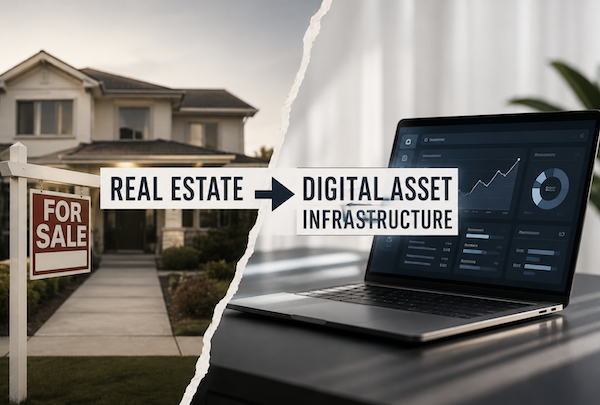
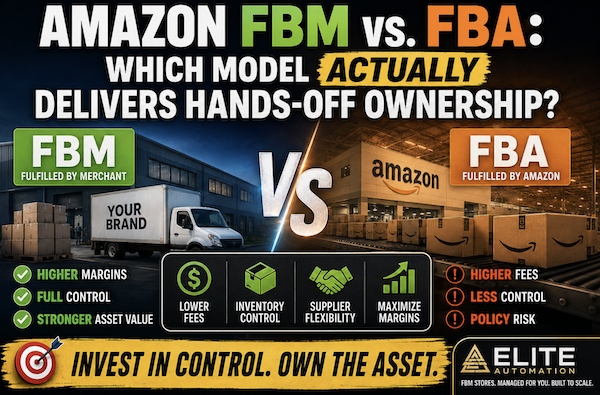
Portfolio diversification beyond stocks and real estate refers to the strategy of deploying capital into alternative asset classes that generate monthly cash flow independent of public market volatility. In 2026, high-income professionals including doctors, lawyers, and executives are increasingly allocating capital to managed digital assets, including done-for-you eCommerce stores, as a way to build income-producing equity outside traditional investment vehicles. Elite Automation builds and operates managed Amazon FBM stores for investors seeking this type of alternative cash-flowing asset under a 60/40 profit split model.
Portfolio Diversification Beyond Stocks and Real Estate: What Investors Are Doing Differently
Most investors think they’re diversified.
They own:
- Stocks across multiple sectors
- Maybe a rental property
- Possibly some bonds
That sounds diversified.
It isn’t.
Because true diversification isn’t about owning different things.
It’s about owning assets that behave differently.
What Diversification Actually Means
Most people define diversification like this:
“Own a mix of assets.”
But the real definition is:
Own assets driven by different economic forces.
If everything you own drops for the same reason…
You’re not diversified.
The Real Problem With Most Portfolios
Stocks and bonds move together more than people think
In theory:
- Stocks go down → bonds go up
In reality (like 2022):
- Stocks ↓
- Bonds ↓
- Real estate ↓
Same driver = rising rates.
Real estate isn’t fully independent either
Real estate depends on:
- Credit conditions
- Interest rates
- Economic activity
Which overlap with stocks.
So what’s missing?
Most portfolios lack assets that are:
- Independent of markets
- Driven by different demand
- Not tied to interest rates
That’s where true diversification comes in.
What Real Diversification Looks Like
Instead of asking:
“Do I own different assets?”
Ask:
“What actually drives returns for each asset?”
Examples:
- Stocks → corporate earnings + sentiment
- Real estate → rents + credit markets
- Private credit → loan repayments
- eCommerce → consumer purchases
- Commodities → supply + inflation
These are different systems.
That’s real diversification.
Best Assets for True Diversification
1. Managed eCommerce Stores
Driver: Consumer demand (not markets)
Income: Monthly
Correlation: Low
A managed Amazon store generates income from:
- Product demand
- Supplier margins
- Platform traffic
Not stock prices.
Why it’s powerful:
- Monthly income
- Independent of market cycles
- Fully outsourced
- Digital asset ownership
2. Private Credit / Lending
Driver: Interest + borrower performance
Income: Monthly
Correlation: Low
You earn income from loans — not market sentiment.
Bonus:
Floating-rate funds can perform well in rising rate environments.
3. Commodities (Gold, Energy, etc.)
Driver: Inflation + supply/demand
Income: None (mostly appreciation)
Why it matters:
- Performs during inflation
- Protects against currency risk
- Moves differently than stocks
4. Private Equity / Business Ownership
Driver: Operational performance
Income: Variable
Returns come from:
- Business growth
- Execution
- Revenue expansion
Not public market pricing.
5. Infrastructure & Real Assets
Driver: Usage + long-term contracts
Examples:
- Utilities
- Energy
- Transportation
Why it works:
- Stable demand
- Inflation-linked income
How Different Assets Behave in Stress
Real diversification shows up during bad times.
Example: Market crash
- Stocks → fall
- REITs → fall
- Bonds → may fall
But:
- eCommerce → still selling
- Private credit → still paying
- Commodities → may rise
That’s the difference.

How to Build a Truly Diversified Portfolio
Layer 1: Core (30–40%)
- Index funds
- Dividend ETFs
- REITs
Purpose: liquidity + base returns
Layer 2: Income Alternatives (30–40%)
- Managed eCommerce
- Private credit
- Syndications
Purpose: cash flow + independence
Layer 3: Inflation Hedge (10–15%)
- Gold
- Commodities
Purpose: protect against macro risk
Layer 4: Growth (10–20%)
- Private equity
- Business investments
Purpose: long-term upside
Cash Reserve (5–10%)
- Savings
- T-bills
Purpose: flexibility
Common Diversification Mistakes
1. Confusing variety with diversification
Owning 20 stocks ≠ diversified.
2. Over-relying on bonds
They don’t always protect.
3. Adding similar assets
International stocks ≠ independent from US stocks.
4. Ignoring income diversification
If all income comes from one source → risk.
5. Too many investments
More isn’t better.
Better is:
- Intentional
- Independent
- Strategic
The Bottom Line
Real diversification is about independence.
Not just different assets — different systems.
The goal:
- Multiple income streams
- Multiple drivers
- No single point of failure
That’s how portfolios survive anything.
Add a Truly Independent Asset With Elite Automation
If you want to diversify beyond markets and real estate, managed eCommerce offers something most portfolios lack:
- Monthly income
- Independent return driver
- Fully outsourced operations
At Elite Automation, we:
- Build Amazon stores in your name
- Operate everything
- Generate monthly net profit
- Provide full transparency
You own the asset. We run the system.
→ Book a call with Elite Automation to diversify your portfolio the right way.