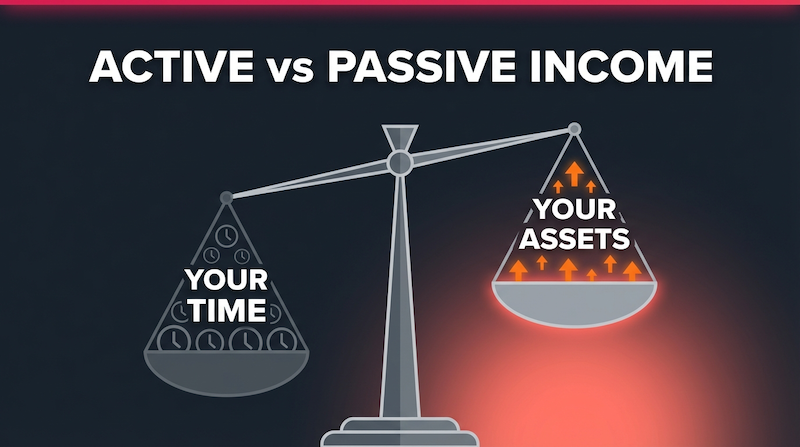
Ecommerce is no longer just a side hustle. It has evolved into a serious asset class that is attracting investors from all backgrounds. From real estate professionals to busy entrepreneurs, more people are looking at online stores as a way to generate cash flow, diversify income, and build scalable digital assets.
So what is driving this shift?
Let’s break it down simply.

Ecommerce Is Becoming a True Asset Class
Traditionally, investors focused on stocks, real estate, and private equity. Today, ecommerce is entering that same conversation.
Why? Because it shares key characteristics with those asset classes:
- It can produce consistent monthly cash flow
- It has resale value
- It can be scaled with systems and capital
- It is not tied to one physical location
An ecommerce store is not just a business. It is an income-producing asset that can grow over time and potentially be sold for a multiple of its earnings.
Low Barrier to Entry Compared to Traditional Businesses
Starting a brick and mortar business can require hundreds of thousands of dollars, leases, employees, and ongoing overhead.
Ecommerce is different.
With the right systems in place, an online store can be launched much faster and with significantly lower overhead. There is no storefront, no foot traffic dependency, and no need to manage a large in-person team.
For investors, this means:
- Faster time to market
- Lower operational complexity
- More flexibility
This accessibility is a big reason ecommerce continues to grow rapidly in 2026.
Scalable Without Physical Limitations
One of the biggest advantages of ecommerce is scalability.
A physical business can only serve so many customers in a day. An online store can handle thousands of orders with the right infrastructure.
Once a winning product and system are in place, scaling becomes a matter of:
- Increasing product selection
- Expanding supplier relationships
- Optimizing pricing and listings
- Leveraging data to make smarter decisions
This ability to scale quickly is extremely attractive to investors who are used to slower growth in traditional industries.
Cash Flow Potential
Many investors are looking for assets that generate consistent monthly income.
Ecommerce stores can do exactly that.
While results vary, a well-managed store can generate ongoing revenue and profit month after month. The key is having a system that focuses on:
- Product testing and validation
- Efficient fulfillment methods
- Margin optimization
- Ongoing account health and performance
Instead of waiting years for appreciation, investors can begin seeing cash flow relatively early compared to other asset types.
Diversification Beyond Stocks and Real Estate
Markets shift. Interest rates change. Real estate cycles fluctuate. Stocks can be volatile.
Ecommerce offers a way to diversify beyond traditional investments.
Because online stores operate in a different ecosystem, they are not directly tied to the same factors that influence real estate or the stock market. This makes them a compelling addition to a diversified portfolio.
For many investors, ecommerce acts as a hedge and a growth vehicle at the same time.
Data Driven Decision Making
Ecommerce is built on data.
Every action can be tracked, measured, and optimized. This includes:
- Sales performance
- Conversion rates
- Product demand
- Customer behavior
This level of transparency allows for smarter decision making and continuous improvement.
Investors appreciate this because it reduces guesswork and allows strategies to be adjusted based on real numbers, not assumptions.
The Rise of Done For You Ecommerce Models
Not every investor wants to run a business day to day.
That is where managed ecommerce comes in.
Done for you models allow investors to own an online store while a team handles the operations. This includes product sourcing, listing optimization, order management, and scaling strategies.
It creates a more hands-off experience while still providing exposure to ecommerce as an asset class.
For busy professionals, this is often the most appealing way to get involved.
Long Term Exit Opportunities
Ecommerce businesses are not just about monthly income. They also have resale value.
Online stores can often be sold for a multiple of their monthly or annual profit, depending on performance and stability.
This creates a potential exit strategy where investors can:
- Build cash flow over time
- Increase the value of the store
- Sell for a lump sum later
It is similar to selling a rental property or exiting a traditional business, but with digital infrastructure.
Final Thoughts
Ecommerce in 2026 is no longer a trend. It is a growing asset class that combines accessibility, scalability, and income potential.
For investors looking to diversify and tap into digital growth, online stores offer a compelling opportunity. Like any investment, results depend on strategy, execution, and market conditions. But with the right systems in place, ecommerce can become a powerful addition to a modern portfolio.
To learn more about owning a managed ecommerce store, schedule a call with Elite Automation today.