The Investor’s Guide to Income-Generating Digital Assets in 2026
A breakdown of how income-generating digital assets work in 2026, how they compare to traditional investment vehicles, and what capital-rich, time-poor investors need to know before allocating capital.

What Is an Income-Generating Digital Asset?
An income-generating digital asset is a piece of owned digital infrastructure, such as a managed eCommerce store, that produces monthly cash flow without requiring the owner to operate it day to day. Unlike a traditional business, the owner holds the equity and the revenue stream while a professional operator handles sourcing, fulfillment, and account management. In 2026, this asset class has moved from a niche strategy to a recognized allocation for investors looking to diversify beyond stocks, bonds, and physical real estate.
Why Investors Are Allocating Capital to Digital Assets in 2026
High-income professionals, business owners, and executives share a common constraint: capital without time. A physician earning $400,000 a year has the liquidity to invest but not the bandwidth to run a second business. Digital assets solve this by separating ownership from operation. The investor supplies the capital and holds the asset. A managed operations team runs it.
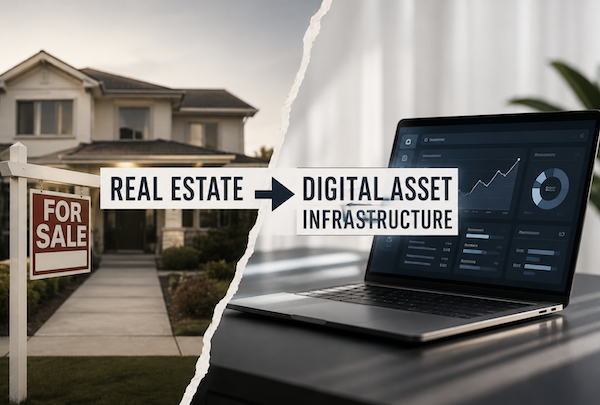
This shift mirrors what happened in real estate decades ago, when direct ownership gave way to professionally managed properties and REITs. eCommerce infrastructure, particularly Amazon’s FBM ecosystem, is following the same trajectory. The platform, logistics, and customer base already exist. What used to require full-time operators can now be run by a management team on behalf of an investor who never touches the account day to day.
How Digital Assets Compare to Traditional Investment Vehicles
| Factor | Managed Digital Asset | Rental Real Estate | Index Funds |
|---|---|---|---|
| Time required from owner | Minimal | Moderate to high | None |
| Typical monthly cash flow | Direct profit split | Rent minus expenses | Dividends only |
| Entry capital | Moderate | High | Low to moderate |
| Liquidity | Sellable as a business asset | Illiquid | Highly liquid |
| Ownership structure | Investor owns account and revenue | Investor owns property | Investor owns shares |
Digital assets sit in an interesting middle ground. They offer cash flow similar to real estate without the physical maintenance, and they offer more direct yield than a diversified fund, though with less liquidity than public markets.
What Makes a Digital Asset “Managed” Versus DIY
Not every digital asset is structured the same way. The distinction that matters most to capital-rich, time-poor investors is who does the work.
- DIY eCommerce: The owner sources product, manages inventory, runs advertising, and handles customer service. This is a full-time operating role wearing an investment label.
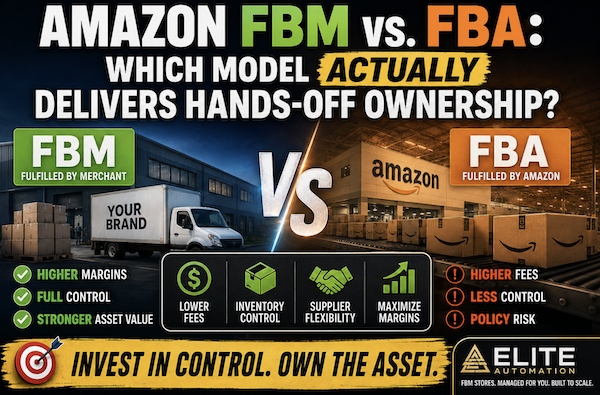
- Managed Digital Asset: A dedicated operations team handles sourcing, fulfillment, account health, and scaling. The investor owns the account and the equity, and receives a share of the profit under an agreed structure, without operating anything themselves. This is the premise of an Amazon automation service.
This second model is what allows the asset to function as true leverage. Capital converts into infrastructure. Infrastructure converts into monthly cash flow. The investor’s time stays their own.
Risk Considerations Before Allocating Capital
Every asset class carries risk, and digital assets are no exception. Investors evaluating this space should look for:
- Account health monitoring: Marketplace compliance directly affects the value of the asset.
- Transparent profit-split structure: Clear terms on how revenue is divided between investor and operator.
- Ownership clarity: The investor should hold the account and the revenue stream, not a license to someone else’s store.
- Operator track record: A management team with a demonstrated history of scaling and maintaining accounts, not a one-time setup service.
Frequently Asked Questions
Is a managed digital asset the same as passive real estate investing? The underlying logic is similar: an investor supplies capital and a professional manager operates the asset. The difference is the infrastructure. Digital assets run on eCommerce platforms rather than physical property, which removes maintenance and tenant management from the equation entirely.
How much capital does it typically take to start? Entry points vary by operator and platform, but this asset class is generally built for investors with meaningful liquid capital to allocate, not for someone testing an idea with a few hundred dollars.
Can a digital asset be sold later? Yes. A well-managed eCommerce store with clean account health and consistent revenue can be sold for a multiple of its annual profit, similar to how a small business or rental property is valued and sold.
What is the biggest misconception about this asset class? That it requires the owner to learn eCommerce. In a properly managed structure, the investor never touches sourcing, fulfillment, or advertising. Their role is capital allocation and oversight, not operation.
Elite Automation builds and manages fully operated Amazon FBM stores on behalf of clients who want the yield of eCommerce without the operating role. If you’re evaluating digital assets as part of a diversified portfolio, book a strategy call to see how the model works.